
In May 1825, in honor of the upcoming fiftieth anniversary of the signing of the Declaration of Independence, the Marquis de Lafayette traveled through Kentucky during his illustrious American Farewell Tour (Figure 1). The venerable French celebrity, who was the last surviving major general of the American Continental Army, symbolized liberty and idealism and was fêted with parades and parties commemorating his heroic contributions to the American Revolution. On 14 May, between stops in Louisville on 12 May and Lexington on 15 May, he was notably celebrated in Frankfort, the seat of state government. In the capital city, a grand procession on St. Clair Street passed the public square, where “ladies welcomed the General from the windows by scattering roses and waving handkerchiefs.”[1] Lafayette’s secretary André-Nicolas Levasseur, who accompanied him, wrote that “…the entertainments given on this occasion by the inhabitants of the town, to which were joined those of the neighbouring counties, were very brilliant, and strongly impressed with that ardent and patriotic character which distinguishes all the states of the Union, but which, among the Kentuckians, is more manifest, and expressed with all the energy of a young people, enthusiastic in the cause of liberty.”[2] The day ended with a festive ball held at Captain Daniel Weisiger’s eponymous tavern (Figure 2) where, according to oral tradition, his wife Lucy Price Weisiger (Figure 3) toasted Lafayette with a monogrammed silver goblet (Figure 4) featuring elaborate floral repoussé decoration made by Lexington silversmith Henry Fletcher (1789-1866). Like this silver cup raised in the state seat at Frankfort, a storied silk dress in the Kentucky Historical Society collection survives as a tangible object—imbued with pride and patriotism—tied to Lafayette’s visit (Figure 5). It expands the material world of Lafayette’s central Kentucky sojourn to include celebrations in smaller but emerging communities, “those of the neighbouring counties” as described by Levasseur.
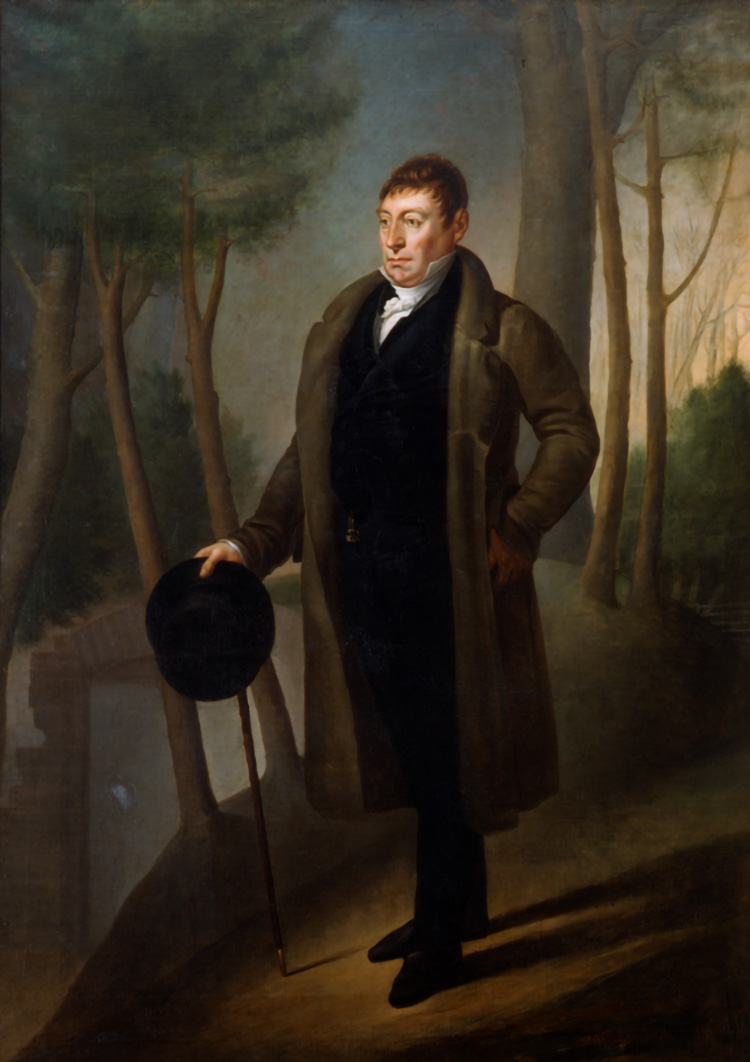 Figure 1 |
![Fig. 2 Invitation to a ball in honor of “General” [the Marquis de] Lafayette Broadside (facsimile), 1825. Courtesy of the Kentucky Historical Society Broadside Collection, 2008M04.](https://www.mesdajournal.org/files/Downs_Fig_02_.jpg) Figure 2 |
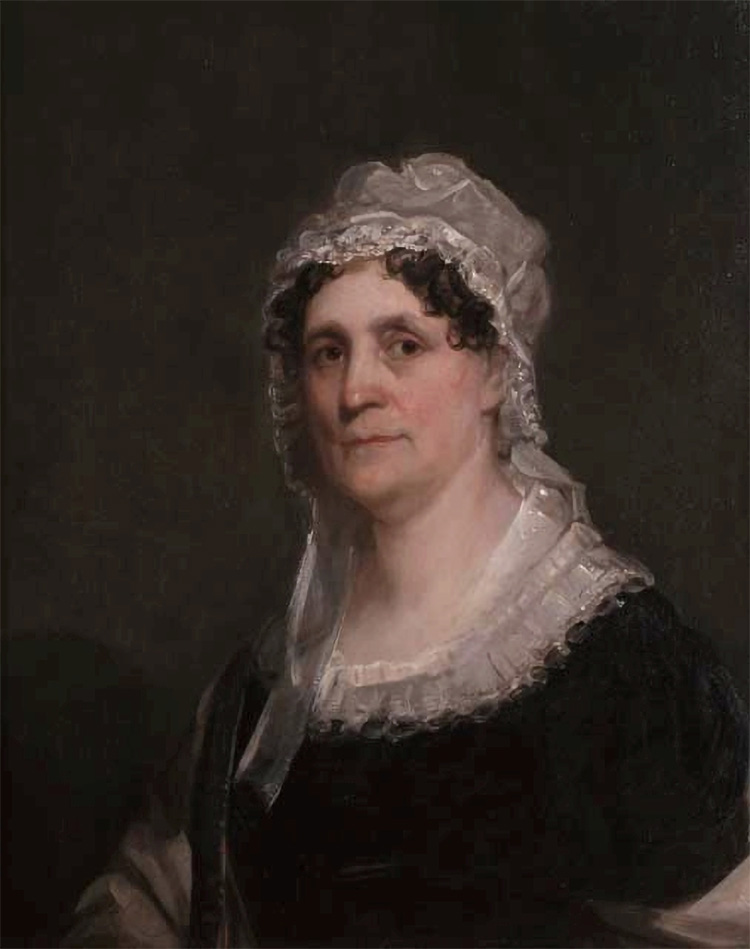 Figure 3 |
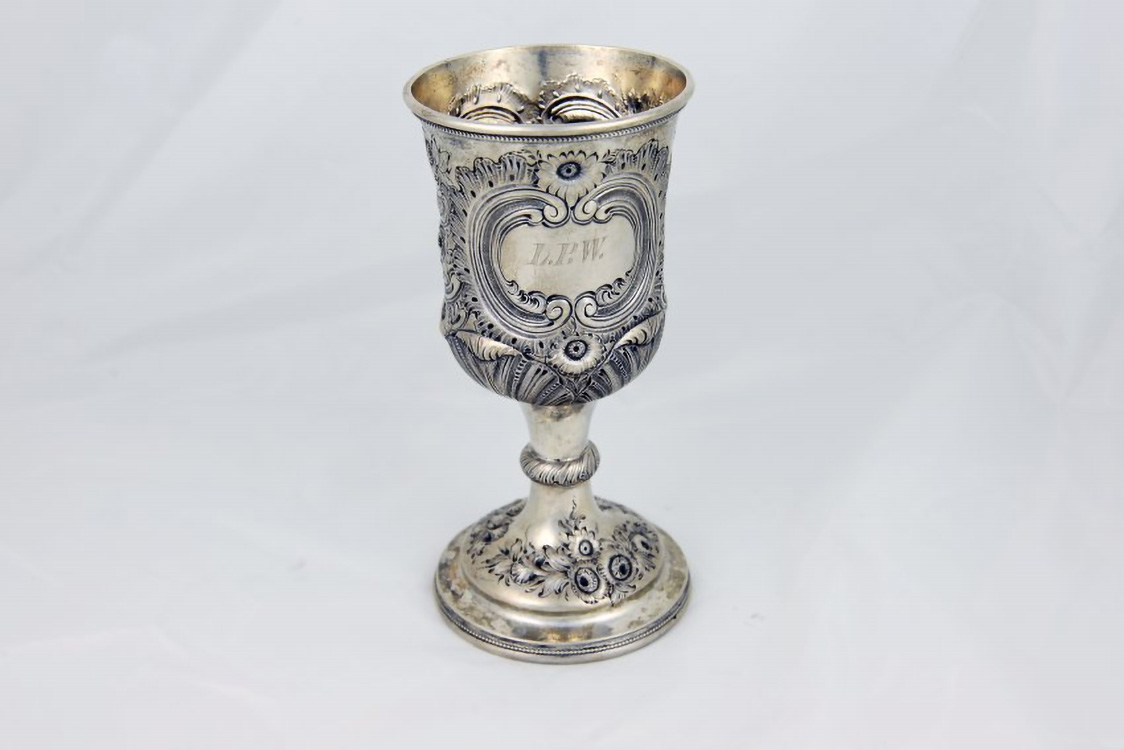 Figure 4 |
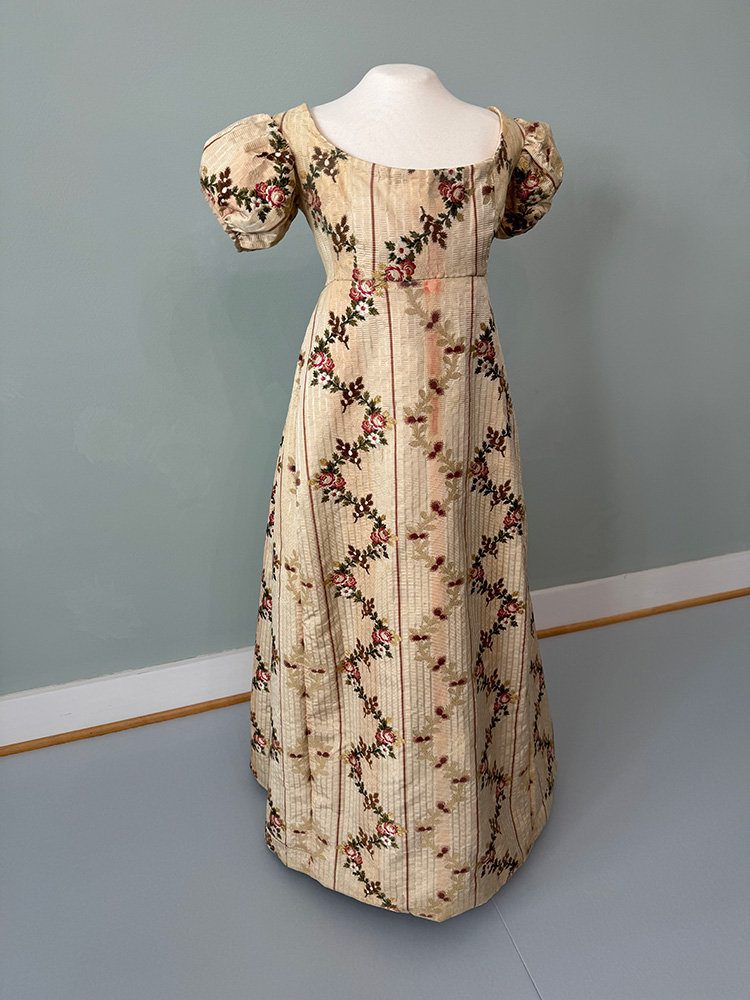 Figure 5 |
According to the donors’ family history, the dress was worn by nineteen-year-old Sarah Louisa Lane (1806–1830) at a ball honoring Lafayette in nearby Shelbyville.[3] Hoping that Lafayette would honor their small town with a triumphant visit, a committee of Shelbyville citizens wrote to the general on 7 May 1825, inviting him to be the guest of honor at a public dinner at the local R. Brenham’s Tavern. While no specific date for the dinner is mentioned in the letter, Lafayette traveled through Shelbyville on 13 May, the day before he reached Frankfort.[4] Several of the authors of this letter were founding members of the Shelbyville community, established in 1792. They communicated a particular connection with Lafayette when they asserted that “The people of Kentucky, indeed claim to be, peculiarly the children of your patriotic efforts, and their prosperity to be the practical result of those free instructions which your valor contributed to establish.”[5] General Joseph Winlock (1758–1831), one of the Shelbyville committee members, purportedly had served with George Washington at Valley Forge and was Sarah Lane’s uncle.[6] Her dress survives as an extraordinary garment that not only embodies the settlement patterns and economics of an early, privileged Kentucky family, but also the power of Revolutionary memory as Kentuckians celebrated independence decades after the American Revolution and the establishment of Kentucky’s statehood in 1792.
Sarah’s custom dress was reworked from an older textile: an imported French or English silk-brocade fabric with supplementary weft decoration, replete with alternating pink- and rust-colored stripes and woven, meandering green vines and clusters of white, pink, and brown flowers.[7] Her descendants maintained that this luxurious eighteenth-century fabric was originally fashioned into a dress worn by Sarah’s mother, Sarah “Sallie” Stephenson (1766–1826), during the festivities surrounding her own wedding to Presley Carr Lane (1764–1819) in Loudoun County, Virginia, in 1785.[8] This economical practice of repurposing textiles was not uncommon, as the value of silk fabric in the late eighteenth century likely compelled women to save and remake their dresses to keep up with the latest fashions. Sallie and Presley were both Virginians, but Presley had established a career in the Pennsylvania legislature by 1787.[9] In 1810, the couple appears to have maintained residences in both Fairfax, Virginia, where Sallie was living with a household of forty-two members, including thirty-two enslaved people, and in Bullskin, Pennsylvania, where Presley managed a residence with nine free household members.[10]
After Presley’s unsuccessful campaign for the United States House of Representatives in 1816, the Lanes relocated to Shelby County, Kentucky, where Sallie was reunited with her sisters Effie Stephenson Winlock (1770–1851) and Mary “Polly” Stephenson Knight (1768–1839).[11] Sallie’s husband Presley Carr Lane died in 1819, but she is listed in the 1820 Shelby County Census. Her household consisted of seventeen people, including four enslaved men and boys and six enslaved women and girls.[12]
According to Winlock family history, Sallie Stephenson Lane’s cherished gown likely made the arduous journey with her from Virginia or Pennsylvania to Kentucky. While the style and profile of the original dress are unknown, it may have been made in the robe à l’anglaise style, which was popular in both Europe and the United States in the 1780s.[13] It was upcycled for her daughter sometime before Lafayette’s 1825 visit to incorporate the high waist, low neckline, puffed sleeves, and shorter hemline fashionable during the 1810s and 1820s. The heavy, woven-silk fabric was well suited for the construction of the structured bottom and pleated skirt (Figure 6), and the delicate, fabric-covered buttons at the back attest to the skill of the unknown dressmaker (Figure 7). Sarah Lane married Burr Green Powell (1800–1895) on 19 May 1825, only days after Lafayette visited Shelbyville. She may have also worn the dress during her wedding celebrations (Figure 8).
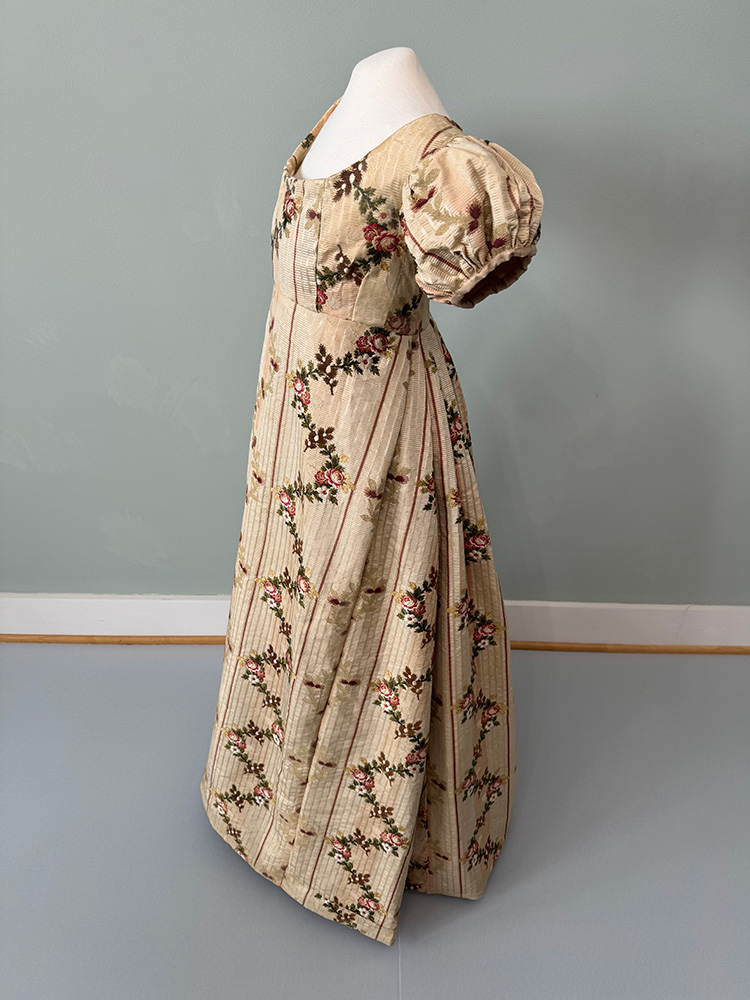 Figure 6 |
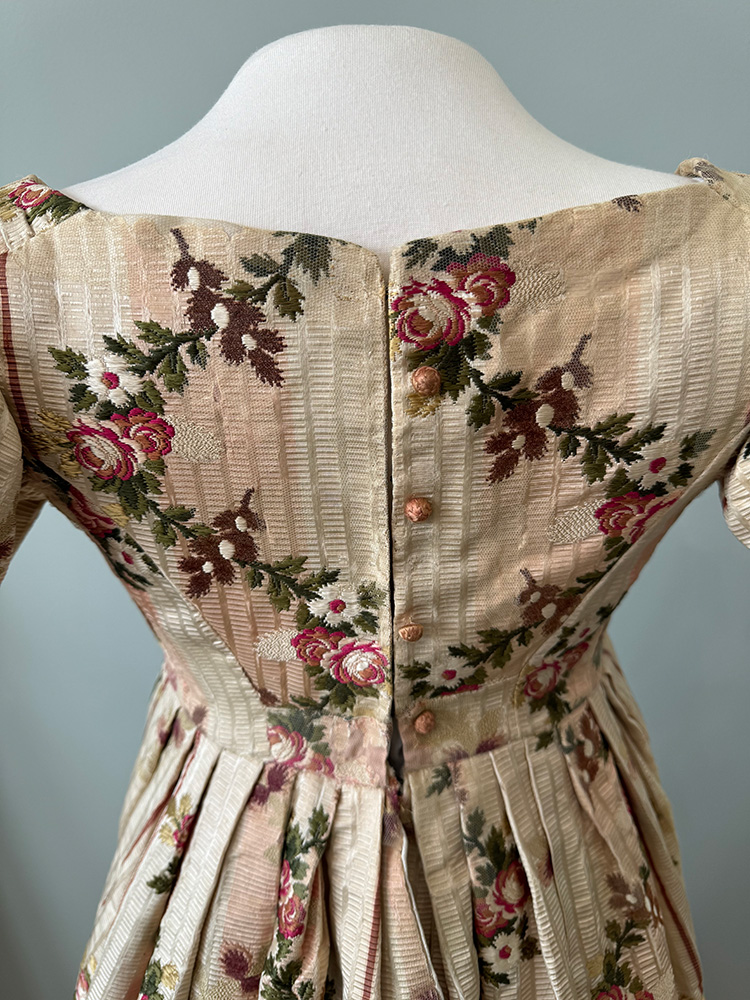 Figure 7 |
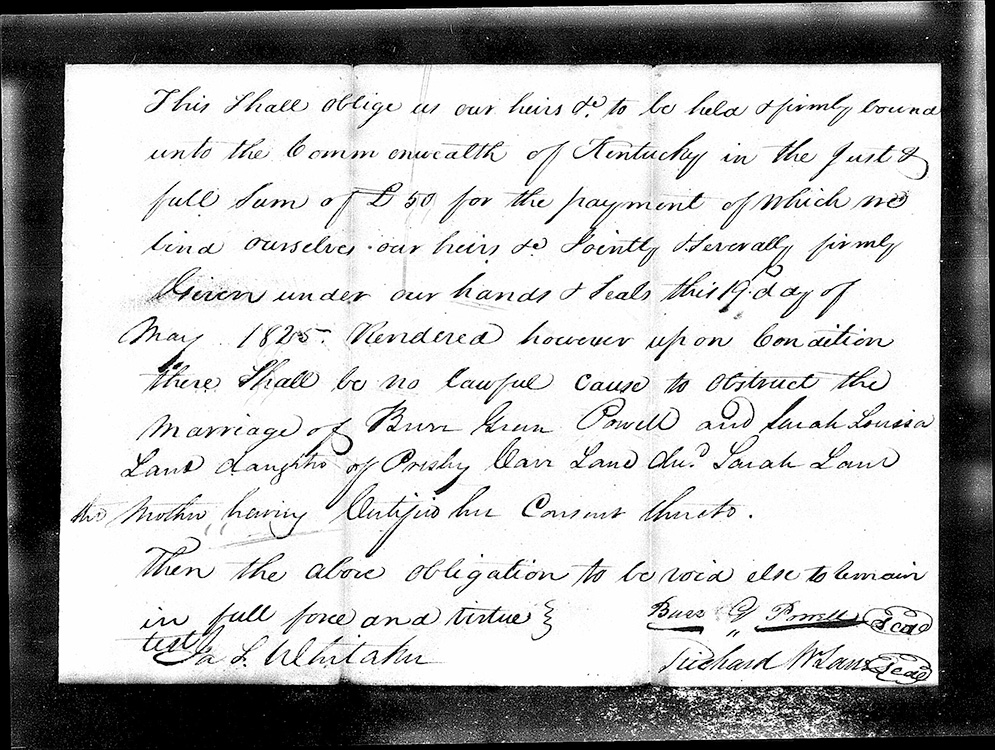 Figure 8 |
Made from a textile said to have been worn by mother and daughter forty years apart, the “Lafayette Dress” was donated to the Kentucky Historical Society in the 1960s by Winlock family descendants. The story of the dress became widely disseminated not only within the family that preserved it, but also throughout the Shelbyville community. Over time, it was protected and shared by other family members who cherished it as a family heirloom, as a direct link to Lafayette’s final visit to America, and as a testament to the fervor of the ongoing popular memory surrounding the Revolutionary era. When interviewed generations later in the 1960s, descendants recalled that Sarah’s daughter, Ann Maria Powell (1827–1921), “enjoyed showing her mother’s dress to callers as well as a handsome comb which adorned her mother’s hair.”[14]
Today, the dress continues to serve as a connection and witness to America’s golden jubilee, Lafayette’s role in its celebration, and early Kentucky’s material world. With the support of the Kentucky Historical Society Foundation, the dress was cleaned, conserved, and stabilized in 2025 in honor of the 200th anniversary of Lafayette’s visit to Kentucky.
Jennifer Downs is Senior Curator at the Kentucky Historical Society and can be reached at [email protected].
[1] “Reception of General Lafayette,” The Frankfort Argus, Frankfort, Kentucky, 18 May 1825.
[2] André-Nicolas Levasseur, Lafayette in America in 1824 and 1825; or Journal of a Voyage to the United States Vol. II (Philadelphia, PA: Carey and Lea, 1829). Online: https://www.gutenberg.org/cache/epub/61778/pg61778-images.html#Page_150 (accessed 29 April 2026).
[3] Notes and correspondence in the Kentucky Historical Society’s accession files indicate that Sarah Lane’s descendants also referred to her as Sarah Louise.
[4] Edgar Erskine Hume, Lafayette in Kentucky (Frankfort, KY: Transylvania College and the Society of the Cincinnati in the State of Virginia, 1937), 47.
[5] Adresse de Shelbyville, Kentucky, 7 May 1825. CP229, Fondation de Chambrun-Lafayette. Many thanks to Julien Icher, Founder and President of The Lafayette Trail, Inc., who discovered this letter in the Fondation archives, and to Helen McKinney, Director of the Shelby County Historical Society, for bringing this letter to my attention.
[6] Joseph Lovering, “Memoir of Joseph Winlock,” Biographical Memoirs, National Academy of Sciences 1 (1877): 331.
[7] Two similar fabrics attributed to England are represented in the Colonial Williamsburg Foundation collection, one that survives as a fabric fragment and one that survives as a sack-back gown in the robe à la française style. See Silk, Brocade, Cannelé, and Lancé Document; England; ca. 1775. Silk and silk chenille. HOA: 44 5/8”; WOA: 21” (overall). Courtesy of the Colonial Williamsburg Foundation, acc. no. 1991–535, Gift of Mrs. Cora Ginsburg. Available online: https://emuseum.colonialwilliamsburg.org/objects/519/silk-brocade-cannele-and-lance-document?ctx=c71a44033d73389034896a068f1adbdc3b3146e9&idx=0 (accessed 27 August 2026). And Robe à la Française; England; 1770–1780. Silk brocaded with silk, trimmed with silk, linen bodice and sleeve lining. LOA: 56 1/3”. Courtesy of the Colonial Williamsburg Foundation, acc. 1991–472,A, Gift of Mrs. Cora Ginsburg. Available online: https://emuseum.colonialwilliamsburg.org/objects/439/sack-saque-robe-a-la-francaise?ctx=211310d35ffdf92ca3244d3c8d62f5902f07ab30&idx=91 (accessed 27 August 2026). Thank you to Neal Hurst, Curator of Textiles and Historic Dress, The Colonial Williamsburg Foundation, for bringing these objects to my attention.
[8] Donor’s note in Kentucky Historical Society accession files.
[9] Library of the Senate of Pennsylvania, https://www.library.pasen.gov/people/member-biography?id=4906 (accessed 29 April 2026).
[10] 1810 US Federal Census, Fairfax, VA, [roll 68, p. 278]; 1810 US Federal Census, Bullskin, Lafayette, PA [roll 54, p. 1033].
[11] Nancy Quackenbush, “Some Northern Neck Lanes,” Magazine of Virginia Genealogy 24, no. 4 (November 1986): 3–22. Effie Stephenson married General Joseph Winlock, and Mary “Polly” Stephenson married Dr. John Knight.
[12] Fourth Census of the United States, 1820; Census Place: Shelby, Kentucky; Page: 144; NARA Roll: M33_24; Image: 156.
[13] For a similar example of a recycled eighteenth-century gown in the Maine Historical Society’s collection, see Gown by a member of the Jewett family; 1825. Silk, cotton. Courtesy of Maine Historical Society, A86–735. Available online via “Collecting 250,” The Decorative Arts Trust: https://collecting250.com/gown/ (accessed 29 April 2026).
[14] “General Lafayette Visited Shelbyville in 1825,” The Shelby Sentinel, Shelbyville, Kentucky, 23 November 1966. The location of the hair comb described by Sarah Lane Powell’s daughter Ann Maria Powell is presently unknown.